


Box ticking will not work with SEBI’s new ESG framework
News from Web 19-Aug-2023
Environmental, Social and Governance (ESG) reporting has become a business necessity rather than an option or for that matter a mere regulatory compliance. Increasingly, it has become a tool for a competitive edge in a market which prefers eco-friendly products, suppliers and consumers. Investors and lenders are considering ESG parameters as important as financial parameters, if not more, in their due diligence exercise.
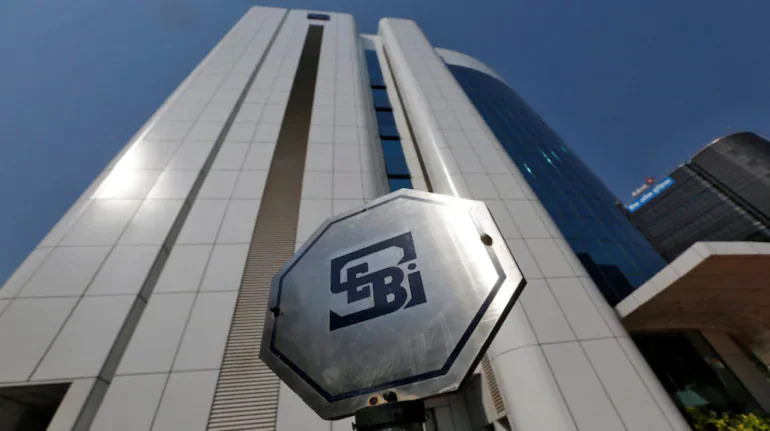
ESG came into focus after the Securities and Exchange Board of India’s (SEBI) new framework, issued in July 2023, mandating stringent ESG disclosure requirements, reasonable assurance by an independent agency and regulations for ESG rating albeit progressively over a period.
The highlight of the framework is ESG disclosure and reasonable assurance for entities in the value chain which aggregates 75 percent of the value of its purchases and sales. It includes upstream and downstream activities in order to provide a holistic view of an entity’s ESG impact in a manner that is consistent, transparent and fair. To lend credibility, listed entities are required to undertake reasonable assurance on the Business Responsibility and Sustainability Report (BRSR) Core as per the glide path — top 150 listed entities from 2023-24 and all top 1,000 listed companies by 2026-27.
No More Green Washing
The key performance indicators (KPIs), as sought in the BRSR Core, are quantifiable and do incorporate matrices that reflect sustainability outcomes. To illustrate KPI on ‘gender diversity in business’ indicates gross wages paid to women relative to men at all levels and suggests the ability to recruit and retain women. Similarly, the KPI of ‘openness in business’ reflects concentration in purchases and sales and in transactions with related parties. KPIs in the BRSR Core contain intensity ratios, such as the intensity of greenhouse gas (GHG) emissions, water consumption, waste generation etc. This means that compliance cannot be taken as a mere box-ticking exercise which has been misguiding and at times deceptive. ‘Green washing’ in ESG disclosures will no more work.
As per a recent survey by PwC, ESG-focused institutional investment may increase 84 percent to $34 trillion in 2026 to constitute 21.5 percent of assets under management. Belying common belief, nine of ten asset managers as per a recent survey believe that integrating ESG into their investment strategy will improve overall returns. Lenders are giving due weight to ESG parameters in due diligence and carrying out third-party assessments to monitor the achievement of agreed targets. Litigation, apart from investor activism, against green washing in ESG disclosures by companies, are on the rise in the US, EU and other jurisdictions.
Companies thus need to prepare themselves for the transition and embrace change in order to be future-ready. There is no other option left for companies as the SEBI’s framework, over a period, may become stricter and stricter. Regulatory oversight and enforcement for sure will be more entrenched as in the case of financial reporting. The government and markets are also increasingly becoming restless and demanding greater and quicker action.
Pragmatic Move By SEBI
SEBI, on its part, has been pragmatic as it has been selective in the application of the ESG framework now as it was earlier. It has not only followed a glide path but has also given sufficient time to enable corporates to adapt and adopt. The progress made by companies so far though limited, in letter as well as spirit, is nevertheless heartening as it is guided more by market pressures and incentives.
Under the new regime, the companies will be required to have a well-thought vision, set clear-cut objectives, formulate a holistic approach and ensure a commensurate institutional framework for effective compliance. Passing a board resolution and putting together a set of policies and reporting compliance on that basis will no more work. ESG drive has to be enterprise-wide and integral to organisational culture and ethos.
ESG policies and approaches, risk management, monitoring and reporting framework have to be integrated with other enterprise-wide strategies, policies and systems. In addition, the company has to identify, prioritise, prepare and implement a plan for mitigating or minimising actual or potential effects of operations and products of entities in the value chain — some or many of these may be MSMEs. For example, a car manufacturer has to trace its chain to the manufacturer of steel and at the same time that of the potential adverse impact of petrol consumption by the buyer of its car.
It is important to realise that ESG is more than good intentions or boardroom discussions. It is about embedding ESG ethos and principles across the enterprise and at all levels — from investment to operations to innovations. Orientation of culture and mindset, and refocusing the organisation would need the best people and technology. The board should set the tone and top management should lead by example. If there is a focus on ‘G’ i.e., governance, plan and implementation of the ‘E’ and ‘S’ components of ESG is better ensured. It is advisable to have a separate ESG committee of the board rather than ESG losing its focus when it is made part of the CSR committee as ESG and CSR are fundamentally different.

More News
Hacked By Team_CC || EXPLOITER~XED Was Here!
India’s Carbon Credit Trading Scheme (CCTS) marks a pivotal shift toward a reg...
15-Apr-2026
India’s Climate Budget 2026-27
India’s Climate Budget 2026–27 reflects a targeted approach to the energy tr...
11-Mar-2026
ESG Frameworks and Why They Matter: A Rating Provider’s Perspective
An in-depth overview of key global and regulatory ESG frameworks, explaining how...
23-Jan-2026
UK Proposes Regulation of ESG Ratings to Strengthen Market Trust
The UK proposes formal regulation of ESG rating providers to address transparenc...
15-Jan-2026
Double Materiality Assessment and its Significance
This blog explains the concept of Double Materiality Assessment and why it is be...
12-Jan-2026